BTK

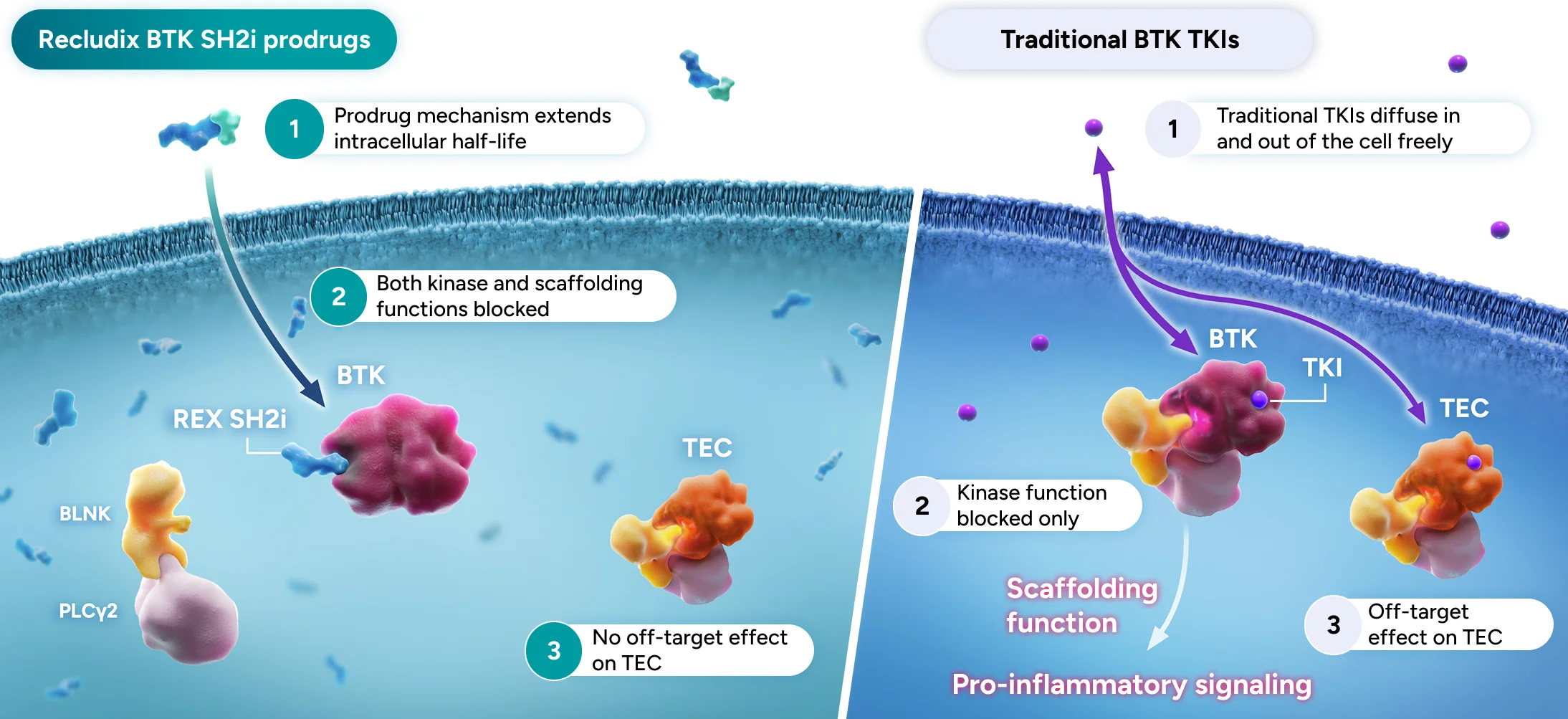
Recludix has identified potent BTK SH2 domain inhibitors with durable pathway inhibition and notably high selectivity for BTK. A highly selective BTK SH2 domain inhibitor has the potential to provide maximal efficacy through deep and durable inhibition of the BTK pathway while minimizing the off-target safety risks associated with kinase-targeted agents. In preclinical studies, a BTK SH2 inhibitor reduced skin inflammation in a clinically relevant model of chronic spontaneous urticaria and reduced neuroinflammation in a model of multiple sclerosis. Additionally, inhibition through the SH2 domain results in greater selectivity as compared to BTK tyrosine kinase inhibitors (TKIs) or degraders.
BTK in inflammatory disease
BTK is involved in both the innate and adaptive immune responses, and BTK TKIs have been successfully developed as treatments for B cell malignancies, becoming the cornerstones of care for chronic lymphocytic leukemia and mantle cell lymphoma. Given BTK’s role in the differentiation and activation of B cells and myeloid cells, it is also an exciting target for the treatment of autoimmune diseases where the overactivation of B cells and the generation of antibodies against self are part of the disease pathogenesis. BTK is also involved in the production of inflammatory cytokines. The overproduction of cytokines can result in chronic inflammation, a hallmark of inflammatory disorders.
BTK inhibitors could be a valuable treatment option for multiple autoimmune and inflammatory diseases, such as chronic spontaneous urticaria, graft-versus-host disease, multiple sclerosis, rheumatoid arthritis, systemic lupus erythematosus, Sjögren’s disease, and pemphigus vulgaris, among others.
The challenge has been to develop more selective and better tolerated BTK inhibitors for chronic inflammatory diseases that can achieve high levels of target engagement and efficacy.
Recludix’s program targeting the BTK SH2 domain enables a differentiated profile versus other BTK-targeting approaches, such as traditional TKIs or degraders. Targeting the BTK SH2 domain inhibits the formation of the pro-inflammatory signaling complex by blocking the interaction of BTK to its adaptor protein, BLNK. BTK is thus unable to phosphorylate PLCγ2 resulting in inhibition of signal transduction. A highly selective inhibitor that targets the SH2 domain has the potential to minimize the safety risks associated with kinase-targeted agents. Targeting the SH2 domain has demonstrated very high in vitro selectivity for BTK over tyrosine-protein kinase (TEC) off-target kinases, tens of thousands of times greater than even the most selective BTK TKIs. Finally, the prodrug mechanism of Recludix’s BTK inhibitor may also lead to more sustained target engagement and coverage.
BTK SH2 inhibition is first-in-class with a differentiated profile relative to traditional TKIs