STAT6 (REX-8756)

Recludix and Sanofi have established a strategic partnership to develop and commercialize first-in-class oral small molecule STAT6 (signal transducer and activator of transcription 6) inhibitors for patients with immunological and inflammatory diseases. STAT6 is believed to play a key role in multiple dermatological and respiratory diseases.
The companies are advancing REX-8756, a first-in-class, highly potent, selective, durable, and reversible orthosteric inhibitor of the STAT6 SH2 domain.
A blinded, placebo-controlled Phase 1 study of REX-8756 is currently underway. The trial is expected to enroll approximately 100 healthy volunteers across multiple cohorts to evaluate the safety, tolerability, pharmacokinetics, and pharmacodynamics of orally administered REX-8756. The study includes single ascending dose (SAD) and multiple ascending dose (MAD) cohorts.
In preclinical studies, REX-8756 elicited complete, rapid, and durable inhibition of STAT6, resulting in potent, biologic-like activity without protein degradation in models of inflammatory diseases.
STAT6 in inflammatory disease
Recludix’s approach to inhibiting STAT6 with oral, selective, reversible, small molecule drugs is a differentiated alternative to the injectable biologics and Janus kinase (JAK) family inhibitors for the treatment of T helper type 2 (Th2)-driven inflammatory diseases.
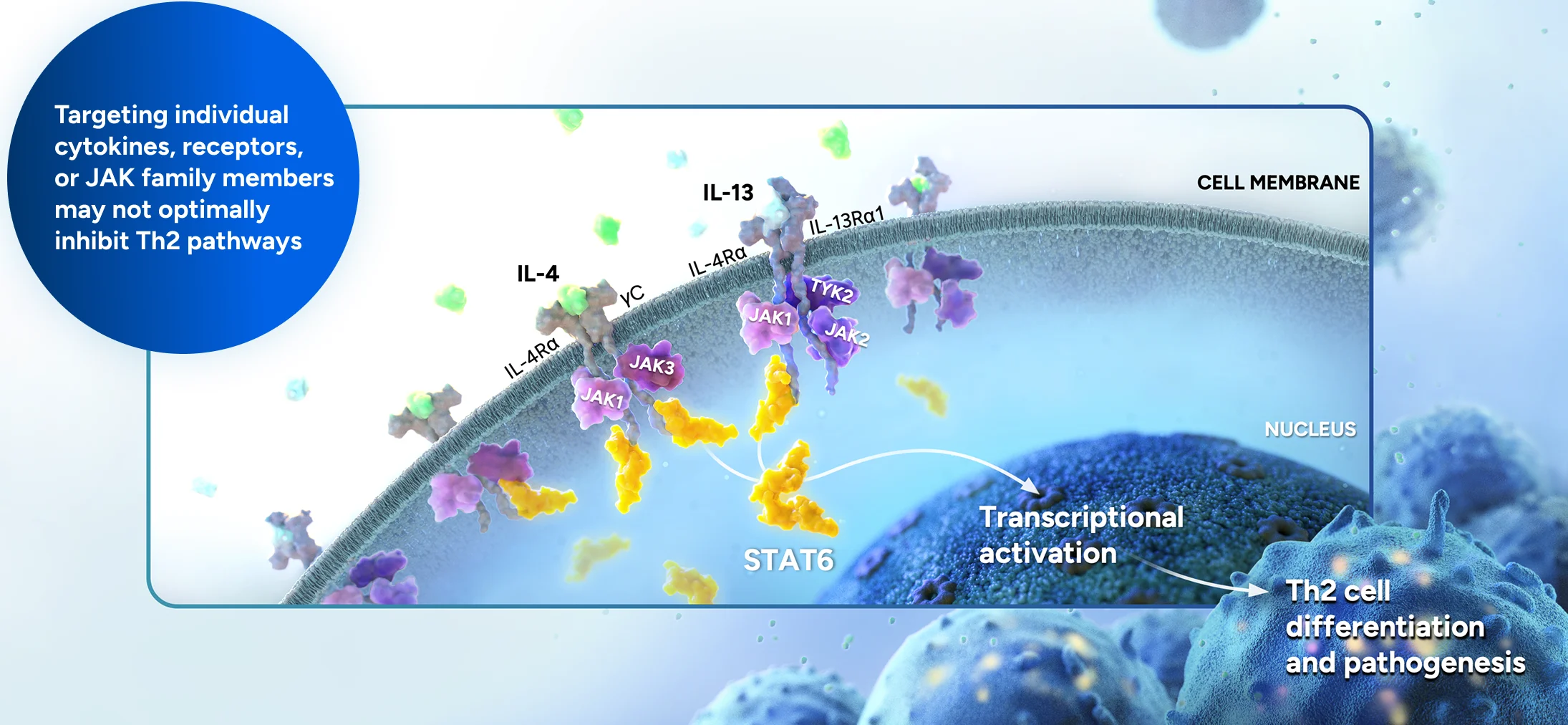
Allergic diseases are commonly driven by Th2 inflammation, with IL-4/IL-13 representing two of the most important cytokines driving disease. STAT6 is required for IL-4 and IL-13 signaling.
By blocking IL-4 and IL-13 binding, treatment with monoclonal antibodies has delivered transformative efficacy across both common and rare diseases, including atopic dermatitis, asthma, chronic rhinosinusitis with nasal polyps, and eosinophilic esophagitis. However, these large molecules require regular injections, are typically restricted to certain patient subsets, and can provoke immunogenicity.
Oral, reversible inhibitors of the JAK family have been approved as treatments for Th2-mediated atopic dermatitis. However, JAK inhibition can negatively impact anti-viral immunity and hematopoiesis, leading to safety concerns.
Beyond inflammation, blocking the IL-4/IL-13 pathway also rapidly improves severe itch which is a key symptom impacting the quality of life of patients with dermatitis and prurigo nodularis, and inhibitors of IL-4 and IL-13 signaling are highly effective in these Th2-driven diseases.
STAT6 is downstream in the JAK/STAT pathway and is not utilized by other cytokines and growth factors. Therefore, a selective STAT6 inhibitor is predicted to be more targeted with fewer side effects and represents a unique and valuable drug target.
STAT6 is a first and best-in-class opportunity to selectively target Th2 inflammatory disease pathways